

THE Government of Canada announced on Friday that it is officially listing Roberts Bank Terminal 2 as a project of national interest.
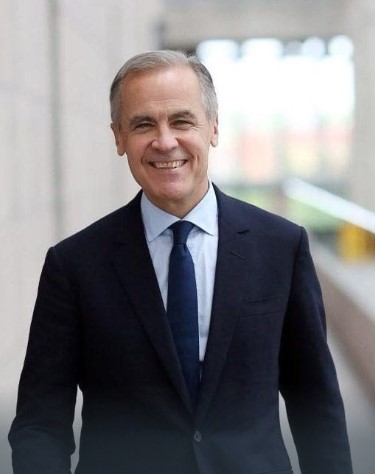
Prime Minister Mark Carney said: “Canada is working. By listing Roberts Bank Terminal 2 as a project of national interest, we are better connecting our economy with the world and diversifying our trade. As the world competes for capital, Canada will not wait. We are building a stronger, more independent, and more competitive Canadian economy.”
Peter Xotta, President and CEO of the Vancouver Fraser Port Authority, said: “Today’s listing decision is an important milestone for Roberts Bank Terminal 2 and for Canada. This nation-building project will unlock $100 billion in new trade capacity, create tens of thousands of jobs and strengthen Canada’s ability to reach markets around the world. At a time when expanding and diversifying our trade has never been more important, we’re excited to keep moving Roberts Bank Terminal 2 forward and build the capacity Canada needs for the future.”
The listing recognizes the project’s critical role in expanding and diversifying Canada’s trade capacity, and building the infrastructure required to support Canada’s long-term prosperity. It provides the immediate regulatory certainty needed to build this vital piece of Canadian infrastructure at the Port of Vancouver, maintains rigorous environmental safeguards and will be done in meaningful consultation with Indigenous communities. The successful execution of Roberts Bank Terminal 2 will be led by the Vancouver Fraser Port Authority (VFPA), who is the proponent for RBT2, the government said.
Through collaboration with the Major Projects Office, the VFPA, and other federal partners, RBT2, a $5.9 billion investment in Canada’s trade infrastructure, is on a viable path to Final Investment Decision (FID) by mid-2027. Friday’s listing decision provides upfront certainty on the remaining applicable federal regulatory authorizations, and accelerates the project’s commercial operations by up to four years, from 2039 to 2035.
This decision marks a major milestone in the implementation of the Port of Vancouver Gateway Strategy, ensuring Canadian businesses can reach global customers through Canadian infrastructure. As Canada’s largest port and the primary gateway to Indo-Pacific markets, the Port of Vancouver plays a vital role in Canada’s economy.

Photo: Doerkson’s X
Roberts Bank Terminal 2 will:
Strengthen Canada’s economic sovereignty and expand trade by:
- Adding 2.4 million containers of annual capacity at Canada’s largest port.
- Increasing container capacity at the Port of Vancouver by approximately 50 per cent.
- Supporting up to $100 billion in annual trade.
- Helping Canada achieve its goal of doubling non-U.S. exports by 2035, and is integral to ensuring Canadian sovereignty and control over key economic linkages to the rest of the world.
Prevent costly bottlenecks and strengthen competitiveness by:
- Addressing forecasted capacity shortfalls at a critical trade gateway.
- Reducing congestion and improving the movement of goods across the Canadian supply chain.
- Avoiding roughly $800-900 million in annual shipping and transportation costs passed on to Canadians that could result from capacity constraints.
- Improving reliability for businesses moving goods to domestic and international markets.
Create high-paying Canadian careers and drive economic growth in Canada by:
- Supporting roughly 17,000 jobs across Canada’s supply chains.
- Contributing approximately $3 billion annually to Canada’s GDP.
- Generating more than $630 million in annual tax revenues.
Lower costs for Canadians and move goods faster by:
- Saving Canadians roughly $1 billion annually in shipping related costs by investing in rail networks, logistics facilities, and port modernisation.
- Cutting delivery times between Vancouver and Toronto by approximately 17 per cent.
- Reducing container import costs by up to 25 per cent.
Advance responsible development by:
- Maintaining rigorous environmental protections and existing conditions from the federal environmental assessment.
- Creating training, procurement, employment, and business opportunities for Indigenous communities through 27 Mutual Benefit Agreements.
The government says it is protecting Canada’s oceans and marine life that depend on them by:
- Investing nearly $2B to protect fish and fish habitat, marine mammals, Pacific salmon, Southern Resident Killer Whales (SRKW), and other species at risk.
- Supporting broader investments in marine conservation and strengthen Canada’s ocean ecosystems.
- Establishing a Conservation Agreement with BC Ferries that includes an objective to reduce underwater radiated noise from BC Ferries vessels in SRKW habitat by 50 per cent by 2036.
- Setting a new interim underwater noise objective within SRKW critical habitat, focused on maintaining 2023 underwater noise levels while working through reductions over time. This work will support the development and implementation of future actions to further reduce underwater noise and support the survival and recovery of SRKW.
The federal government says: “Roberts Bank Terminal 2 is a nation-building investment that will contribute to Canada meeting growing global demand, strengthen our economic sovereignty, and diversify our trade exports in an increasingly uncertain world. Together with complimentary infrastructure, RBT2 will help Canada export with the world, because Canada has what the world wants. It will reduce costs for businesses and consumers, and create the conditions for long-term economic prosperity for decades to come.”