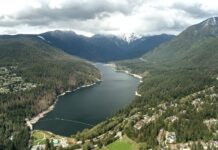
Daily summer water use target set while critical system upgrades underway
METRO Vancouver encourages residents and businesses to reduce water use and adhere to Stage 2 water restrictions to protect the system while critical infrastructure work is underway, and to prepare for implementation of Stage 3 restrictions sometime in June.
The request is tied to critical work underway to build a new water supply tunnel through Stanley Park (the Stanley Park Water Supply Tunnel) which will replace an existing water main that was built in the 1930s and is now at the end of its service life. To facilitate construction, the First Narrows Crossing, one of the region’s key supply pipes from the reservoirs on the North Shore, has been out of service since last fall. If water use increases excessively while the crossing is offline, it could decrease water pressure and affect the ability of first responders to use water for emergencies.
By collectively keeping water use under 1.4 billion litres a day, below the 1.5-billion-litre or more summer peaks but still well above the one-billion-litre winter average, the system will stay resilient while work is completed. Metro Vancouver has one of the highest per-capita water consumption rates in Canada, with plenty of room for every person to introduce more water-wise behaviours in their daily life.
However, forecasts continue to call for unseasonably warm and dry weather, which historically leads to significant increase in water demand, largely due to outdoor water use. Current and historic water use trends indicate that water use in the region will exceed 1.4 billion litres per day starting in June, depending on weather and behaviours.
Metro Vancouver is closely monitoring water use and will provide one week’s notice of a move to Stage 3, recognizing that residents and businesses want certainty. The goal is to take a balanced approach and not bring in Stage 3 until absolutely necessary.
Metro Vancouver also continues to closely monitor the impacts of weather and snowpack on the water supply. While reservoirs are at typical levels, the snowpack is well below normal — about 23 per cent of the historical average. Snowmelt helps keep reservoirs fuller longer, and the snowpack hasn’t been this low since 2015.
In Stage 3, lawn watering will still be prohibited, and there are additional restrictions on watering trees and gardens, filling pools and hot tubs, and washing surfaces, vehicles, and boats.
Weather, snowpack, water demand, and reservoir level information are published on Metro Vancouver’s website weekly. Find full water restriction details at metrovancouver.org/lawns.
Metro Vancouver ensures more than three million residents receive high-quality drinking water every day. Working with member jurisdictions, Metro Vancouver manages a regional system of protected water supply areas, dams, treatment facilities, reservoirs, pump stations, and water mains to keep drinking water flowing reliably throughout the region.