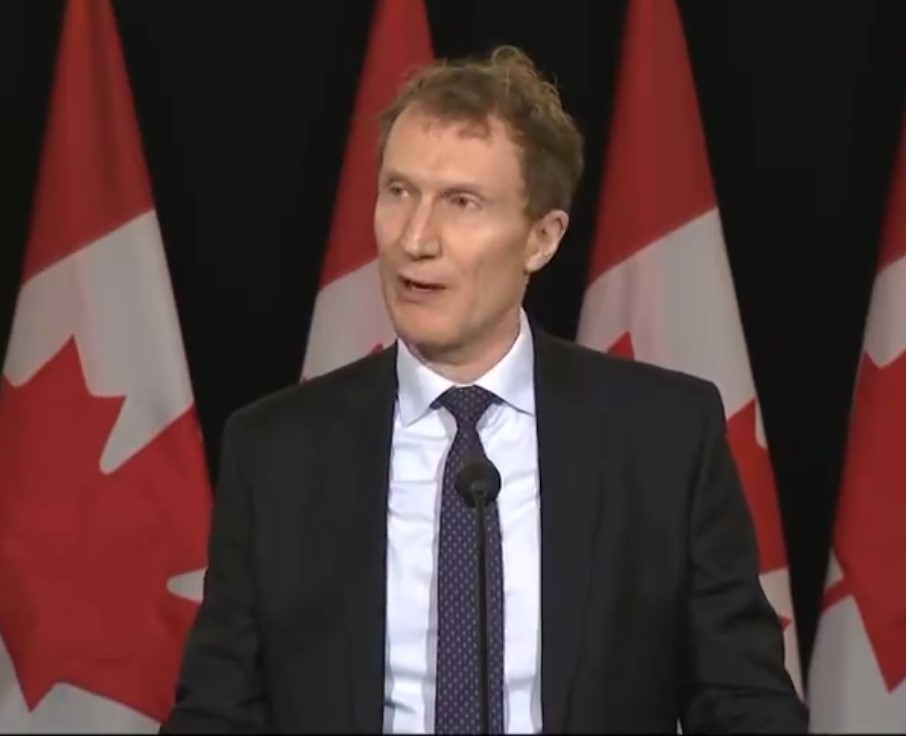
MARC Miller, federal Minister of Canadian Identity and Culture, on Wednesday introduced Bill C-34, the Safe Social Media Act. While laws exist to respond once harm has happened, there is currently very little that requires online services to prevent harm in the first place, says the federal government. The Safe Social Media Act aims to change that by ensuring that social media services and artificial intelligence (AI) chatbots are responsible for addressing harm before it occurs.
The proposed legislation will make online services more accountable and transparent by introducing new safety requirements for social media services and AI chatbot services.
It will include an age restriction preventing children under the age of 16 from having accounts on social media services, with a pathway for social media services to seek an exemption if they can demonstrate that they have put in place sufficient safeguards for children.
The new requirements will also put children’s safety first when products and features are designed, including measures to reduce children’s exposure to certain content and high-risk interactions. Regulated services will be required to identify, mitigate and address the risks on their platforms.
The proposed legislation will create a legislative and regulatory framework through a new Digital Safety Act for social media services, including user-uploaded livestreaming and adult content services, and for certain AI chatbot services. The framework will operate through three core duties:
- The Duty to Protect Children will apply to all regulated services under the Act.
Social media services, including livestreaming and user-uploaded adult content services, will have two additional duties:
- The Duty to Act Responsibly will require services to assess and mitigate risks associated with exposure to seven categories of harmful content, apply labels to synthetically generated content, and provide clear and accessible ways for users to flag harmful content and block other users.
- The Duty to Make Certain Content Inaccessible will require the rapid removal of content that sexually victimizes a child or revictimizes a survivor; or intimate content communicated without consent, including deepfake sexual images.
AI chatbot services will also be subject to a Duty to Act Responsibly that is specifically tailored to their services. They will be required to:
- mitigate the risk of the chatbot communicating harmful content;
- be transparent in terms of their reporting thresholds in crisis situations, such as when a user intends to harm themselves or another person; and
- mitigate the risk that the chatbot will engage in harmful behaviour.
The proposed legislation will establish an independent Digital Safety Commission to enforce regulations, ensure compliance, make online services safer for children and support victims of online harms.
This new legislation will hold online services accountable and ensure they have basic protections in place to keep children safe online.
Quick Facts:
The Safe Social Media Act will establish new safety requirements for social media services and AI chatbot services. There is currently little accountability, transparency or consistency in terms of what platforms do to ensure the safety of their users. The new legislation will include requirements that regulated services identify risks of harm on their platforms, adopt measures to address those risks, implement safety-focused design features, apply labels to synthetically generated content depending on the type of service, make user guidelines accessible, provide tools such as blocking and flagging, submit publicly disclosed digital safety plans, and comply with oversight from an independent regulator.
Under this legislation, services would also be required to reduce exposure to seven specific categories of harmful content, including content that sexually victimizes a child or revictimizes a survivor, intimate content communicated without consent, content that induces a child to self-harm, content used to bully a child, content that foments hatred, content that incites violence, and terrorism or violent extremism content.
The Safe Social Media Act proposes to establish a new Digital Safety Commission of Canada to administer the framework and help foster a culture of online safety in Canada. The new Digital Safety Commission of Canada will:
- enforce statutory obligations and hold regulated services accountable for their responsibilities through reporting, auditing for compliance, issuing compliance orders and issuing penalties to services that fail to comply;
- collect, triage and administer user complaints from users about content that falls within the Duty to Make Certain Content Inaccessible when complaint responses from the social media service are insufficient; and
- set new standards for online safety by conducting research on global best practices, assessing regulated services’ Digital Safety Plans, providing guidance to services on how to mitigate risk, and developing educational resources for the public.
The Act is informed by previous and ongoing federal policy work and extensive consultations on online safety, including engagement with victims and survivors, civil society organizations, Indigenous partners, experts, industry and Canadians. This includes the recent reconvening of the Expert Advisory Group on Online Safety (from March to May 2026) to provide advice on new and emerging issues, as well as targeted engagement with industry and other stakeholders. Previous consultations, focused on democratic expression and protecting youth online, have also informed the proposed approach.
In 2019, one in four youth (25%) aged 12 to 17 reported experiencing cyberbullying in the previous year.
Cybervictimization is associated with multiple indicators of mental ill health, including suicidal ideation and attempt.
Police services across Canada reported 16,905 incidents of online child sexual exploitation (OCSE) in 2024, a 347% rise since 2014.