
VANCOUVER Coastal Health (VCH) on Wednesday notified the public that a skunk captured in downtown Vancouver has tested positive for rabies. While interactions with skunks are rare, a small number of people bitten by the skunk have been assessed and received rabies vaccinations and immunoglobulin to prevent rabies.
Rabies virus is found in the saliva of infected animals and can be transmitted through a bite or, less commonly, a scratch from an infected animal. Rabies virus is not transmitted through exposure to the spray, urine or feces of infected skunks.
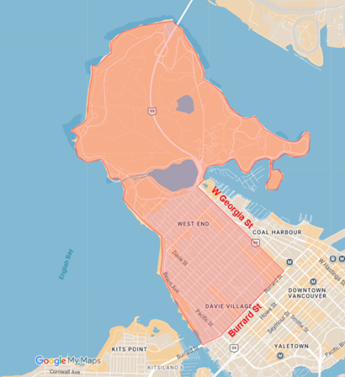
Anyone who may have been bitten or scratched, handled, picked up or otherwise had direct contact with a sick or abnormally behaving skunk in downtown Vancouver West End and Stanley Park Area (see shaded red area in map) between September 22 and October 17 should contact VCH immediately for assessment.
Contact VCH Public Health at 604-675-3900 Monday-Friday (9 a.m.-5 p.m.).
After-hours / weekends, visit an Urgent Primary Care Centre or go to an Emergency Department for assessment.
Those residing outside the VCH region should contact their local health authority for assessment.
Rabies is a serious viral infection that affects the brain and nervous system. It can be transmitted from an infected animal bite, scratch or direct contact with their saliva. Rabies infections in people are extremely rare in Canada. Infections are fatal but can be prevented when rabies vaccines and/or rabies immunoglobulin are administered promptly after an exposure.
Bats are the only known reservoirs of rabies in B.C, meaning they can carry the disease and pass it on to other animals or people. Occasional spillovers to other animal species in specific geographical areas, including skunks, have occurred in B.C.
Do not approach, touch, feed, capture or attempt to assist an injured or sick wild animal or unfamiliar animals. Do not touch or handle dead animals. If you observe a wild animal, including skunks, acting abnormally, please contact the BC RAPP line at 1-877-952-RAPP (7277). The animal may appear disoriented, sick or injured, or may be stumbling, active during unusual times of day, show no fear of people, or be aggressive. If you are bitten or scratched by a bat, skunk or any wild animal, wash the wound with soap and warm water for at least 15 minutes and seek medical care immediately.
Anyone whose dog, cat or other pet was bitten, scratched or had direct contact with a skunk in Downtown Vancouver during this identified period should contact their veterinarian promptly and advise them that their pet may have been exposed to a rabid skunk. Pet owners with no direct contact with the skunk are not at risk for rabies. To protect pets from rabies:
* Vaccinate all pets against rabies regularly.
* Supervise pets when outdoors and keep pets away from wild animals (e.g. dogs on leash).
* Keep pet food indoors or in a secured area to avoid attracting wild animals.
* If your pet is bitten or scratched by a wild animal, consult with your veterinarian immediately.
To learn more about the signs and symptoms of rabies in people and animals, what to do if you or a pet is scratched or bitten by a bat or skunk, or to report wildlife-human interactions where public safety may be at risk, visit the following resources: