METRO Vancouver will temporarily move to Stage 3 water restrictions starting on June 8 to protect the water supply system while critical infrastructure work is completed.
“This year is unique, with warm, dry weather, a low snowpack, and construction on the Stanley Park Water Supply Tunnel impacting our water supply. When the summer-like weather hits, water use can increase by more than 50 per cent, and in order to complete projects like Stanley Park that increase capacity and resilience, we need to work together and bring down our water use so the system is protected while work is underway,” said Mike Hurley, Chair of Metro Vancouver.
The region uses an average of one billion litres of water a day, increasing through the summer to 1.5 billion litres a day. In May, Metro Vancouver implemented Stage 2 water restrictions, which prohibit lawn watering, and set a target to keep regional daily water use under 1.4 billion litres. Below that level, water pressure will not be affected while the First Narrows Crossing is out of service to allow for the current phase of work on the Stanley Park Water Supply Tunnel to be completed. Lower water pressure could affect the ability of first responders to use water for emergencies because of a decrease in water pressure.
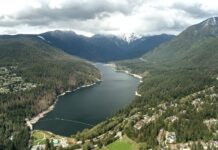
In addition to project work, Metro Vancouver continues to closely monitor how the weather and snowpack are affecting water supply. Forecasts are calling for warm, dry weather, which will drive up demand. While reservoirs are at typical levels, the snowpack, which helps keep reservoirs fuller longer, is well below normal — less than 15 per cent of the historical average.
Despite implementing Stage 2 water restrictions early, water use in May was higher than in May 2025, when the region was in Stage 1 restrictions. Current usage is around 1.2 billion litres per day, but expected to jump with the warm weather forecasted for June. Historic water use trends show that the region regularly exceeds 1.4 billion litres in June, and Stage 3 water restrictions along with strong education and municipal enforcement programs are required to keep the region below that target and ensure the system is protected during June and July. With reductions in outdoor water use, this is achievable.
Under Stage 3:
- All lawn watering is prohibited.
- Trees, shrubs, and flowers can be watered at any time using a water container, drip irrigation, or hose with spring-loaded nozzle. Sprinklers and soaker hoses are prohibited.
- Vegetable gardens can be watered at any time.
- Pools, hot tubs, and decorative water features, such as fountains, cannot be filled or topped up.
- Vehicles and boats cannot be washed at home except to clean windows, lights, mirrors, licence plates, and boat engines for safety. They may be washed at a water-efficient commercial car wash.
- Washing surfaces like driveways and sidewalks is prohibited except in limited circumstances.
Non-residential properties are subject to similar restrictions on lawn and garden watering, as well as filling and topping up decorative water features, and washing surfaces. Filling/topping up pools and hot tubs can be done with an operating permit. Watering at golf courses and sports fields is reduced, but operators can still water to protect these private and public assets. Water play parks may operate if they have user-activated switches. In each case, residents are encouraged to check with their local jurisdiction to confirm requirements in their local bylaws.
Water restrictions do not apply to the use of rainwater, grey water, any forms of recycled water, or other sources of water outside the regional and municipal drinking water supply system. Member jurisdictions enforce water restrictions through local bylaws. Permits are managed by the member jurisdictions and can vary based on individual bylaws.
The First Narrows Crossing is anticipated to be back in service around the end of July. At that time conditions will be assessed, and Stage 3 water restrictions will be lifted if water supply allows.
Weather, snowpack, water demand, and reservoir level information are published on Metro Vancouver’s website weekly. Find full water restriction details at metrovancouver.org/lawns.
Metro Vancouver ensures more than three million residents receive high-quality drinking water every day. Working with member jurisdictions, Metro Vancouver manages a regional system of protected water supply areas, dams, treatment facilities, reservoirs, pump stations, and water mains to keep drinking water flowing reliably throughout the region.