


NEW public opinion polling data from the non-profit Angus Reid Institute – the first comprehensive, regional and national dive into political dynamics since last week’s announcement of a memorandum of understanding regarding a potential pipeline from Alberta to northwest British Columbia – shows that while Prime Minister Mark Carney lost a cabinet minister who disapproved of the MOU deeply, the PM’s approval level among the Canadian population remains stable.
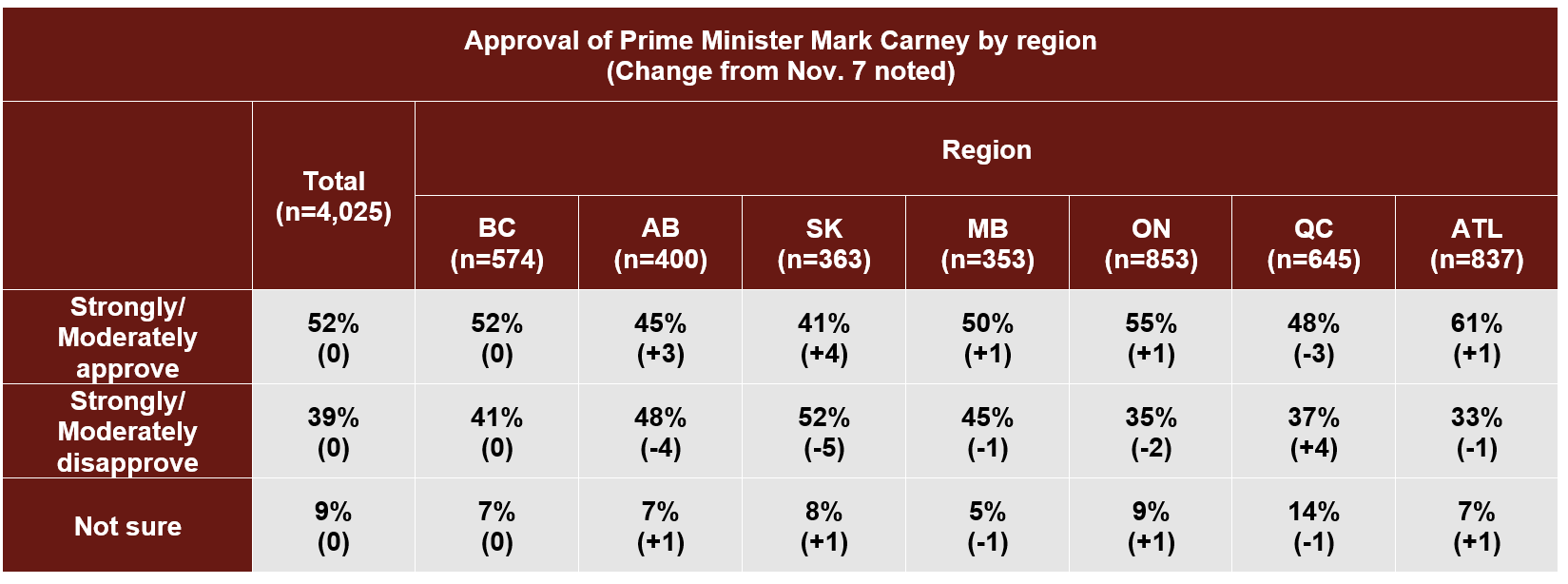
Indeed, both nationally, and in B.C., the epicentre of forthcoming negotiations and most certainly protests over the potential pipeline, Carney’s approval stands at 52 per cent. In Alberta, the PM gains three points in approval, up to 45 per cent.
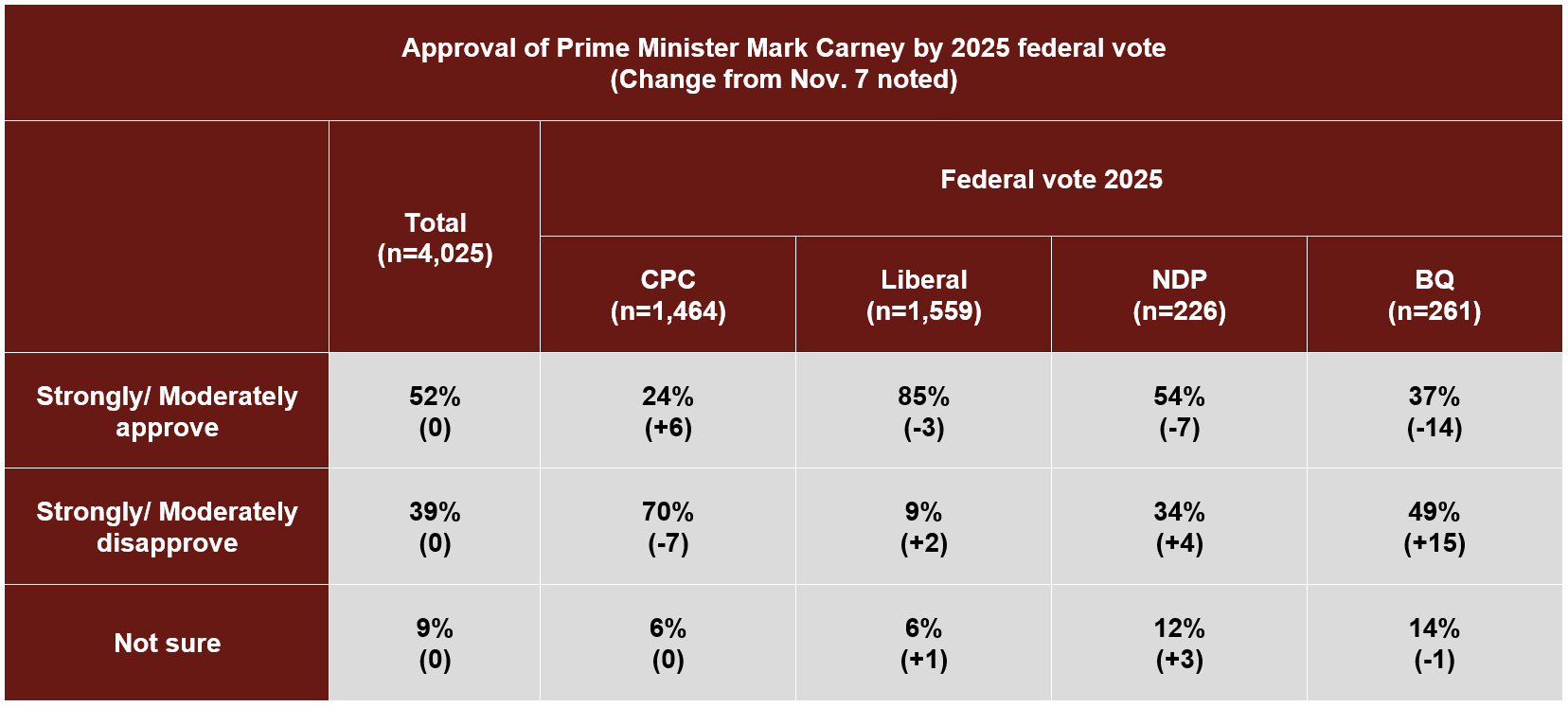
At the federal political level Conservative support has increased for Carney. One-quarter (24%) of those who voted for Pierre Poilievre’s party in April say they approve of the PM, an increase of six points from early November. His approval loss among those who voted for the other major federal parties offsets this gain (Liberal -3 to 85%, NDP -7 to 54% and BQ -14 to 37%).
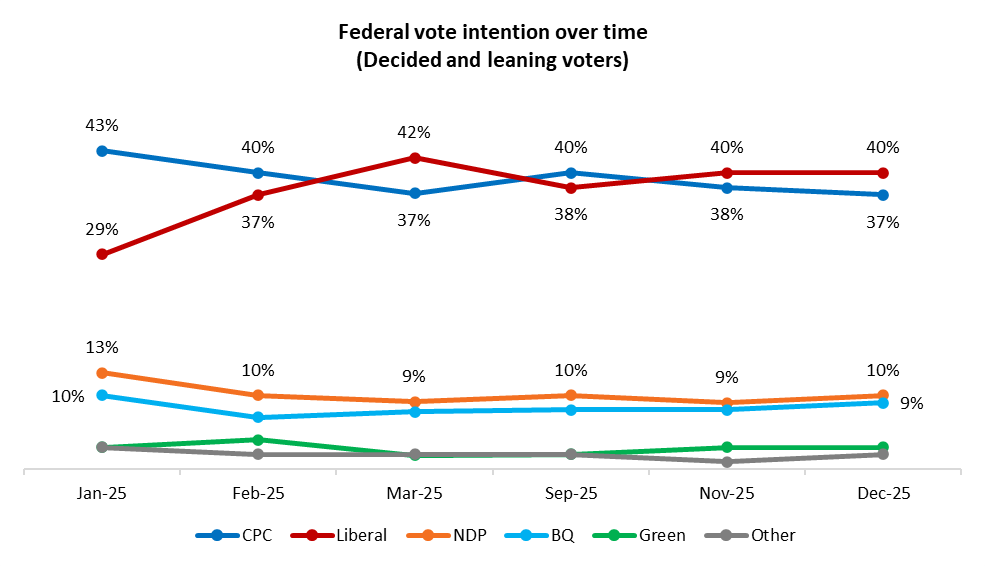
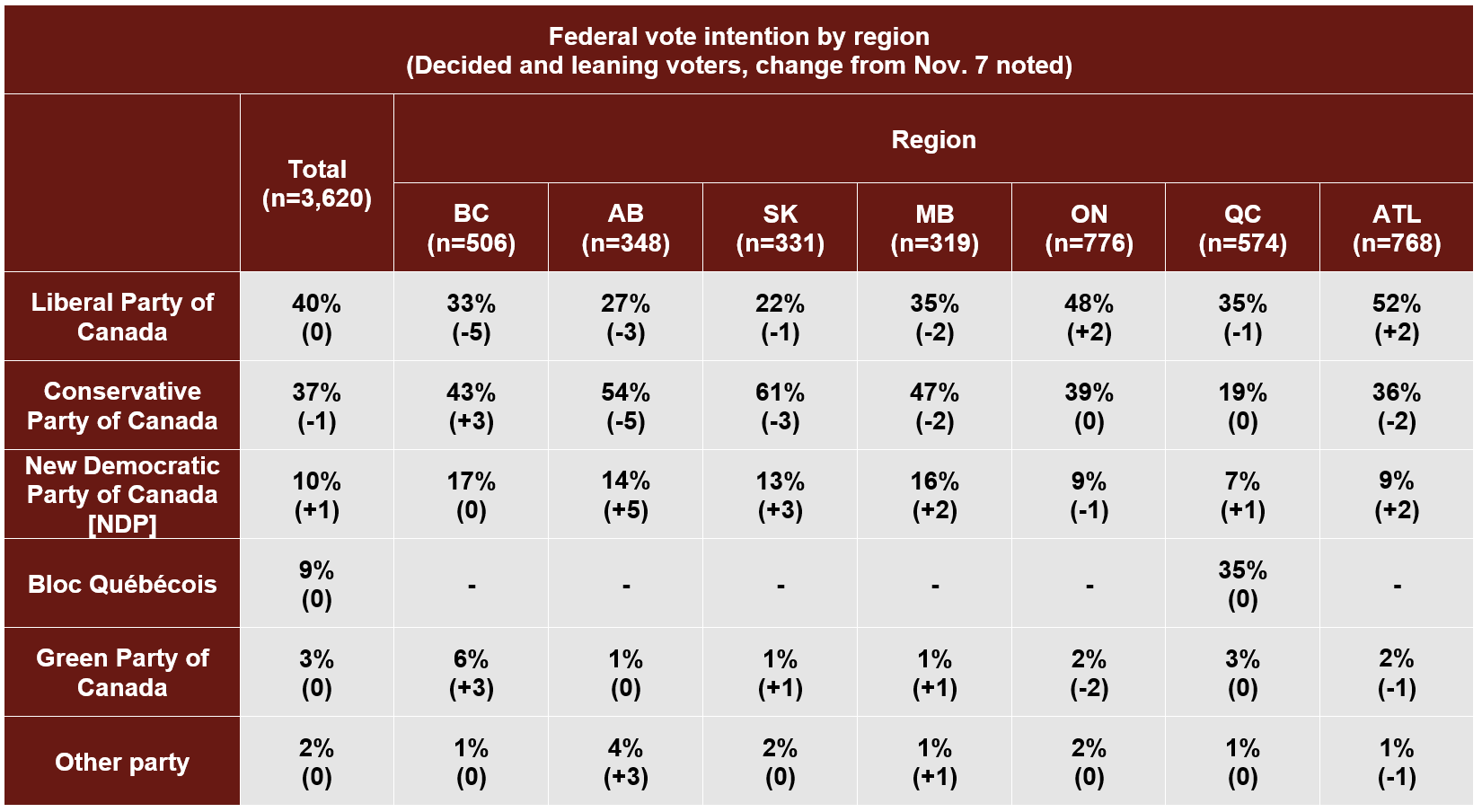
Overall, 40 per cent say they would support the Liberals in a federal election, while 37 per cent would support the CPC. The NDP and BQ, both likely to seek to benefit from some of the unrest among progressives in the country are chosen by 10 per cent and nine per cent respectively.
More Key Findings:
- Voters in Metro Vancouver have shifted considerably after the pipeline project announcement. Compared to early November, support for the Liberals has dropped by 15 points. Vote intention has moved to the CPC (+6), the Greens (+4), and the NDP (+2). The proportion of undecided voters has also grown in Metro Vancouver (+3).
- 18 per cent of Canadians say that the climate and environment is among their top issues. This is a three-point increase compared to March, but well below the 28 per cent who chose this issue in both September and November of 2022.
- The cost of living continues to dominate Canadians’ list of concerns, chosen by 59 per cent and placing as the top issue in every region of the country.