

BY ANJALI GANDHI
PARTICIPATING in the 85th Know India Program was not merely a visit to India; it was a return to a part of myself I did not know I was searching for. As a Canadian raised in a country that celebrates diversity, multiculturalism, and global citizenship, I have always carried India within me in quiet ways. Yet this journey allowed me to move beyond inherited identity and step into lived belonging. Someone during the program said, “When you visit India, you do not discover India, you discover yourself.” I did not fully understand those words when I first heard them. By the end of the journey, they had quietly become my truth.
As a Canadian delegate of Indian origin, this program allowed me to experience Bharat not through textbooks, inherited stories, or distant nostalgia, but through lived moments, through sound, silence, chaos, stillness, conversation, and reflection. For this profound opportunity, I extend my heartfelt gratitude to the Ministry of External Affairs for creating a platform that allows diaspora youth to reconnect with their civilizational roots while engaging with modern India as global citizens.
Throughout the program, one recurring realization emerged. Bharat is not just a place; it is an experience, a consciousness, and a continuity of wisdom that transcends time. The sessions at the Sushma Swaraj Institute of Foreign Service emphasized India’s re-emergence as a civilizational state grounded in the philosophy of Vasudhaiva Kutumbakam, One World, One Family, One Future. Yet this philosophy was not something I only heard in lecture halls; it was something I felt in the warmth of strangers, in the seamless blending of languages, faiths, and traditions, and in the everyday rhythm of Indian life.
The program offered exposure to India’s governance, policy making, knowledge traditions, and cultural heritage. Through visits to institutions shaping India’s technological and diplomatic future, I witnessed how Viksit Bharat is not merely a vision but a living, breathing movement. I saw it in the passionate determination of university youth discussing innovation and sustainability, in policymakers speaking about global responsibility with grounded humility, and in ordinary citizens whose resilience quietly defines India’s progress.
The program deepened my understanding of traditional Indian knowledge systems. Our engagement with yoga and Ayurveda revealed dimensions often lost in global interpretations. At the Morarji Desai National Institute of Yoga, we learned that yoga is not merely bending and stretching the body but a process of internal alignment, a work in, not a workout. This reframing of wellness emphasized that transformation begins internally before manifesting externally.
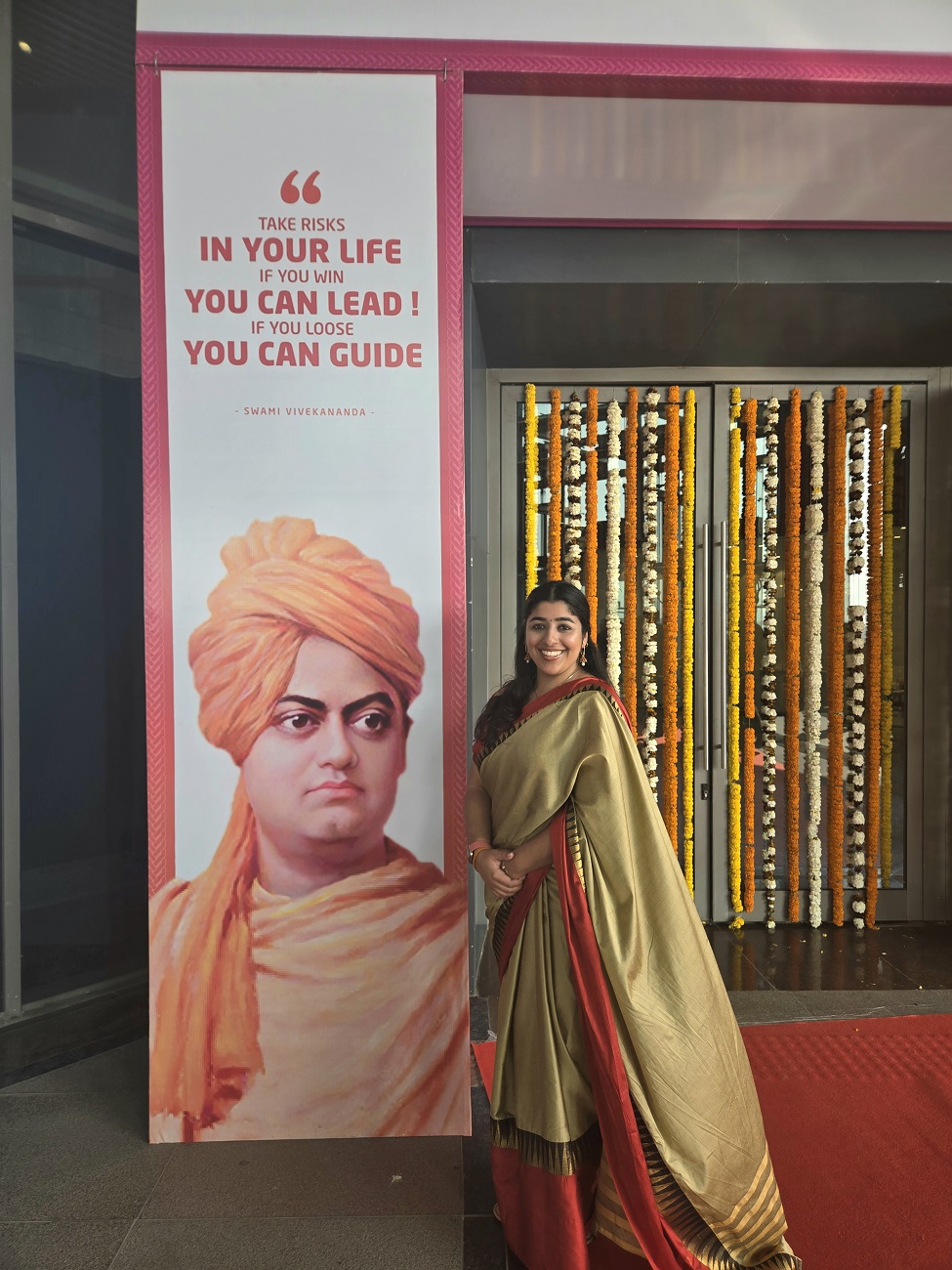
Among all the visits, the most spiritually connecting experience for me was Belur Math. Standing at the place where Swami Vivekananda took samadhi, I felt a stillness that cannot be described through policy language or intellectual reflection. Time seemed to slow. There was a sense of strength rooted in surrender, of service rooted in fearlessness. Swami Vivekananda’s words echoed within me: “Take risks in your life. If you win, you can lead. If you lose, you can guide.” That teaching felt deeply aligned with India’s own civilizational courage. A land that has faced conquest, fragmentation, and challenge, yet continues to rise not in bitterness, but in wisdom.
At the All India Institute of Ayurveda, teachings around mindful living echoed simple yet profound guidance: Eat thoughtfully, live thoughtfully, speak thoughtfully. These teachings reflected India’s longstanding understanding that health is not merely biological but spiritual, emotional, and ecological. Learning about practices such as pranayama, Ayurvedic consultation, and herbal medicine like Ashwagandha illustrated how India’s ancient sciences remain deeply relevant in modern healthcare conversations.
Another dimension that deeply impacted me was India’s philosophical understanding of sound, vibration, and existence. The symbolism of Aum as the universal frequency, and the cosmic significance of numbers such as 108, reflected India’s ability to weave cosmology, spirituality, and mathematics into a unified worldview. I was particularly moved by the teaching that names carry energy, sound influences environment, and identity itself holds vibrational significance. These teachings transformed my understanding of Bharat not as geography, but as living knowledge.
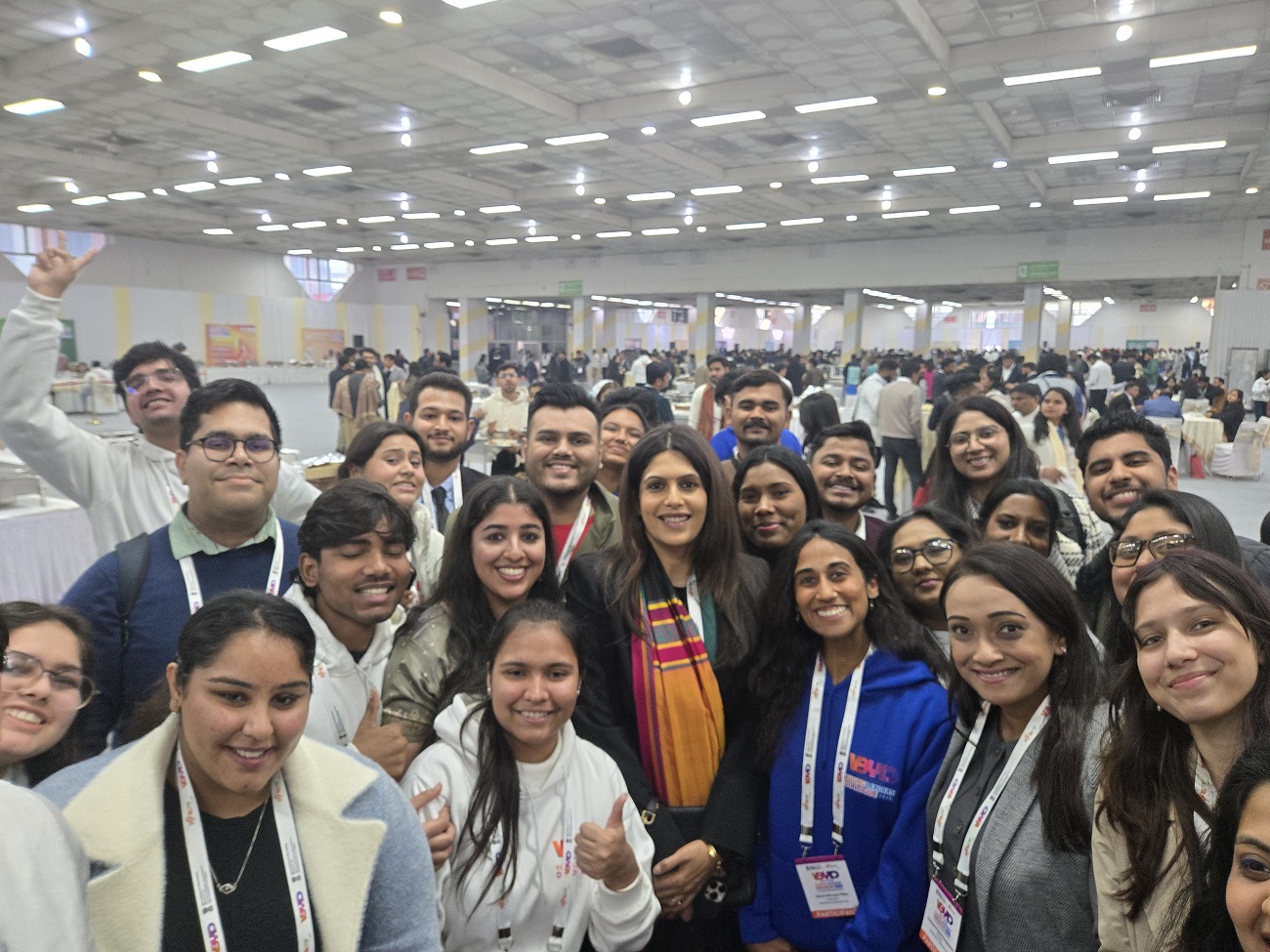
One of the most powerful aspects of the program was the relationships formed with fellow delegates. Participants from across continents arrived as strangers but departed as family. These relationships reflect the true diplomatic success of the Know India Program, not only strengthening global diaspora connections but nurturing emotional and cultural belonging that transcends borders.
While my experience was overwhelmingly transformative, it also invited thoughtful reflection. During several heritage visits and historical narrations, I noticed that colonial perspectives were sometimes unintentionally centered or normalized. The subtle glorification of colonial architecture, historical framing through colonial lenses, and selective storytelling reflected a broader challenge India continues to navigate, the lingering shadow of colonization in historical interpretation and heritage tourism.
Decolonization, in this context, does not mean rejecting history. It means reclaiming narrative ownership. It means ensuring that India’s story is told from the voice of its civilization rather than from the gaze of its conquerors. For diaspora youth especially, authentic exposure to civilizational heritage, including sacred cultural and spiritual landmarks that represent living traditions, would deepen emotional and historical understanding. Strengthening indigenous storytelling would empower participants to experience Bharat not only as a nation that survived colonization, but as a civilization that transcended it.
Despite this reflection, the program beautifully demonstrated India’s pluralistic strength. Learning that India accommodates extraordinary diversity across languages, philosophies, and religious traditions reinforced my understanding that India’s identity is rooted in acceptance. The teaching that helping another person is not charity but service to an extension of oneself captured the essence of India’s Dharmic worldview and deeply influenced my personal reflections throughout the journey.
Personally and professionally, the program has transformed how I understand cultural identity and global responsibility. As someone shaped by Canada’s inclusive values and now deeply reconnected to India’s civilizational wisdom, I feel uniquely positioned to build bridges between these two worlds. Exposure to India’s holistic models of well being, meditation, and community centered healing will deeply influence my future work. The program reinforced that sustainable development must remain culturally grounded and spiritually aware.
As the journey concluded, I carried with me another simple yet powerful lesson shared during the program: “Stop postponing. It becomes a habit. Do it now.” This message extends beyond personal growth. It reflects India’s own journey, a civilization that is reclaiming its narrative, redefining its global role, and embracing its future without postponing its potential.
Leaving India did not feel like departure. It felt like awakening. The nostalgia I carry is not rooted in loss but in gratitude, gratitude for rediscovering a part of my identity, gratitude for witnessing Bharat through its people, philosophy, and progress, and gratitude for being reminded that truth, as many teachers repeated during the program, is not found outside us. It is found within, through reflection, service, and awareness.
The Know India Program did not simply strengthen my understanding of India. It strengthened my understanding of myself, my responsibilities as part of the global Indian diaspora, and my commitment to building bridges between cultures, knowledge systems, and communities.
I return to Canada not divided between two homelands, but enriched by both. Carrying Bharat in my heart and Canada in my character, I move forward with deeper clarity, responsibility, and pride.
This journey was not just a program. It was a homecoming.
(Submitted by the Indian Consulate General in Vancouver)